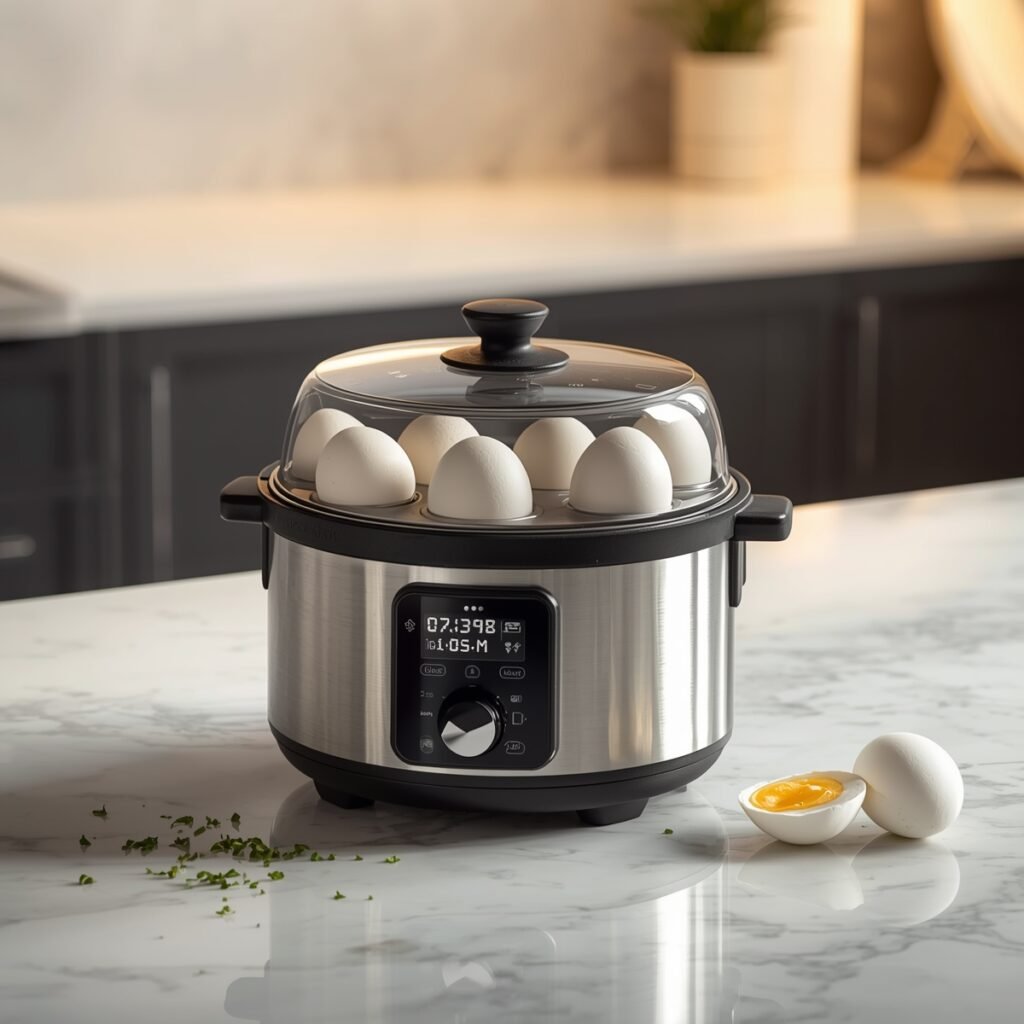
The first time I tried using an egg cooker, I was a bit nervous, to be honest. Would it really cook the eggs perfectly? Would I end up with rubbery blobs of disappointment? I decided to give it a whirl, and I’m happy to report: I nailed it! I thought, “Wow, why didn’t I try this sooner?” I discovered some surprises along the way, like figuring out that the number of eggs you cook can impact the steam time. The more, the merrier—but it also means adjusting your timing a bit. I also experimented with adding a dash of salt to the water to help with the peeling process later on. It worked like a charm!
Best Egg Cookers
Ingredients
- Eggs as many as your cooker can hold – usually 1-12 eggs
- Water the recommended amount varies by cooker, usually marked on a measuring cup that comes with it
- Salt optional, for seasoning later
- Vinegar optional, can help with peeling hard-boiled eggs!
Instructions
- Prep your cooker: Read the instruction manual to understand how much water your egg cooker needs. Use the measuring cup provided to measure accurately.
- Crack those eggs: Place your eggs into the egg cooker. Make sure they’re snug but not too cramped—this isn’t a chicken coop!
- Add water: Pour the measured water into the cooker’s base. If your device has different settings for soft-boiled or hard-boiled, choose wisely!
- On goes the lid: Secure the lid on top. It should fit snugly. This is where the magic of steaming happens. Think of it like an egg sauna!
- Hit the button: Turn the cooker on. If your cooker beeps or lights up, it’s letting you know things are heating up. Exciting, right?
- Wait: Depending on how you like your eggs, the wait time will vary. For hard-boiled eggs, around 12-15 minutes usually does the trick, while soft-boiled might take 6-10 minutes.
- Chill out: Once the timer goes off, carefully remove the eggs (they'll be hot!) and plunge them into cold water to stop the cooking process. Give them a few minutes to cool.
- Peel and enjoy: Gently tap to crack the shell and start peeling! If you're having trouble, try running them under water as you peel. Enjoy your perfectly cooked eggs!
Nutritional Facts
| Nutrient | Per Egg |
|---|---|
| Calories | 70 |
| Protein | 6g |
| Fat | 5g |
| Carbohydrates | 1g |
| Cholesterol | 186mg |
5 Tips for This Recipe
- Always measure the water correctly based on the number of eggs.
- If you want easier peeling, consider adding a teaspoon of vinegar to the water.
- Experiment with cooking times based on your desired doneness; don’t be afraid to play around until you find what works best for you!
- Try to use eggs that are a few days old—they tend to peel more easily than fresh ones.
- Keep your egg cooker clean by washing it after each use—trust me, it helps!
5 FAQs for This Recipe
- Q: Can I cook other items in an egg cooker?
- A: Yes! Some cookers are versatile and allow you to steam veggies or cook dumplings. Check your manual for tips!
- Q: What if I forget to put the water in?
- A: Uh-oh! Your eggs won’t steam properly and could crack. Always measure twice!
- Q: Can I stack the eggs in the cooker?
- A: Not typically. Most cookers have specific trays to prevent overcrowding. Follow the design!
- Q: How long can I store leftover cooked eggs?
- A: You can store them in the fridge for up to a week. Just keep the shells on until you’re ready to eat!
- Q: Can I use frozen eggs?
- A: It’s best to thaw them before cooking. Otherwise, you may end up with an eggy ice sculpture!
5 Storage Tips
- Store boiled eggs in their shells in the fridge for maximum freshness.
- If peeled, place them in an airtight container with water to keep them moist.
- Label containers with the date if you’re batch cooking. Trust me, it helps!
- Use eggs within a week for the best flavor and texture.
- For meal prep, peel eggs the night before and keep them refrigerated for a grab-and-go breakfast.
5 Common Cooking Mistakes
- Not measuring the water correctly, leading to under or overcooked eggs.
- Using eggs that are too fresh, which can make peeling a nightmare.
- Forgetting to stop the cooking with ice water, especially for soft-boiled eggs!
- Not cleaning the cooker regularly, which can affect flavor.
- Overloading the cooker beyond its capacity, causing uneven cooking.
Final Thoughts
Egg cookers are like having a little kitchen helper—making perfect eggs easier than ever! Navigating through the cooking times and water measurements can seem tricky at first, but I promise you’ll get the hang of it. We shared some tips, FAQs, and common mistakes that I wish I knew earlier. With practice and a little creativity, you can enjoy delicious eggs in all forms, from hard to soft-boiled and beyond!
Whether you enjoy them on their own, sprinkled with a touch of salt, or nestled in a salad, eggs are versatile and so satisfying. Remember, it’s all about dialing in what works best for your taste buds!
So let’s get crackin’ and join the egg-cooking revolution. Say hello to your new best friend in the kitchen: the egg cooker!